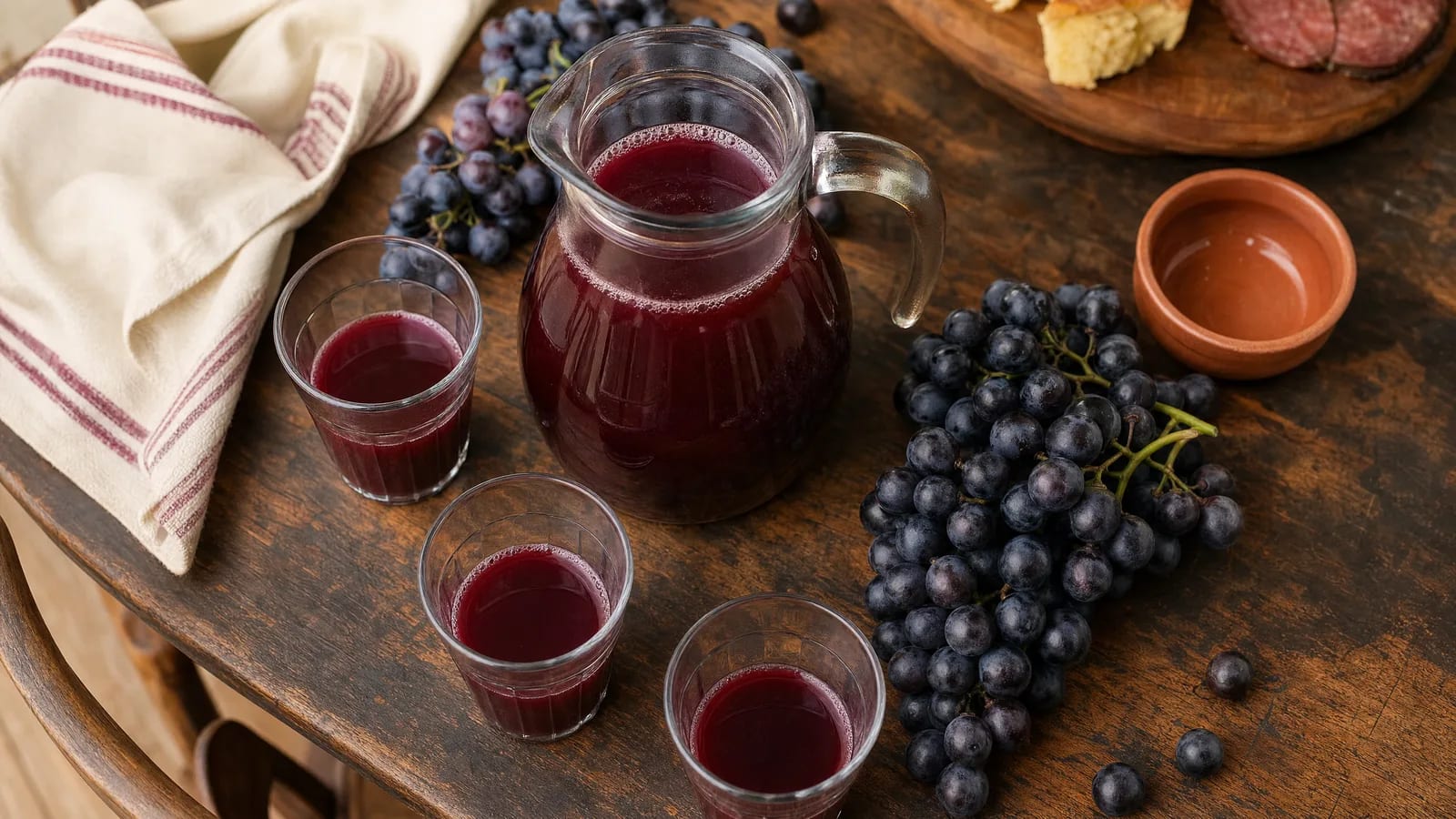
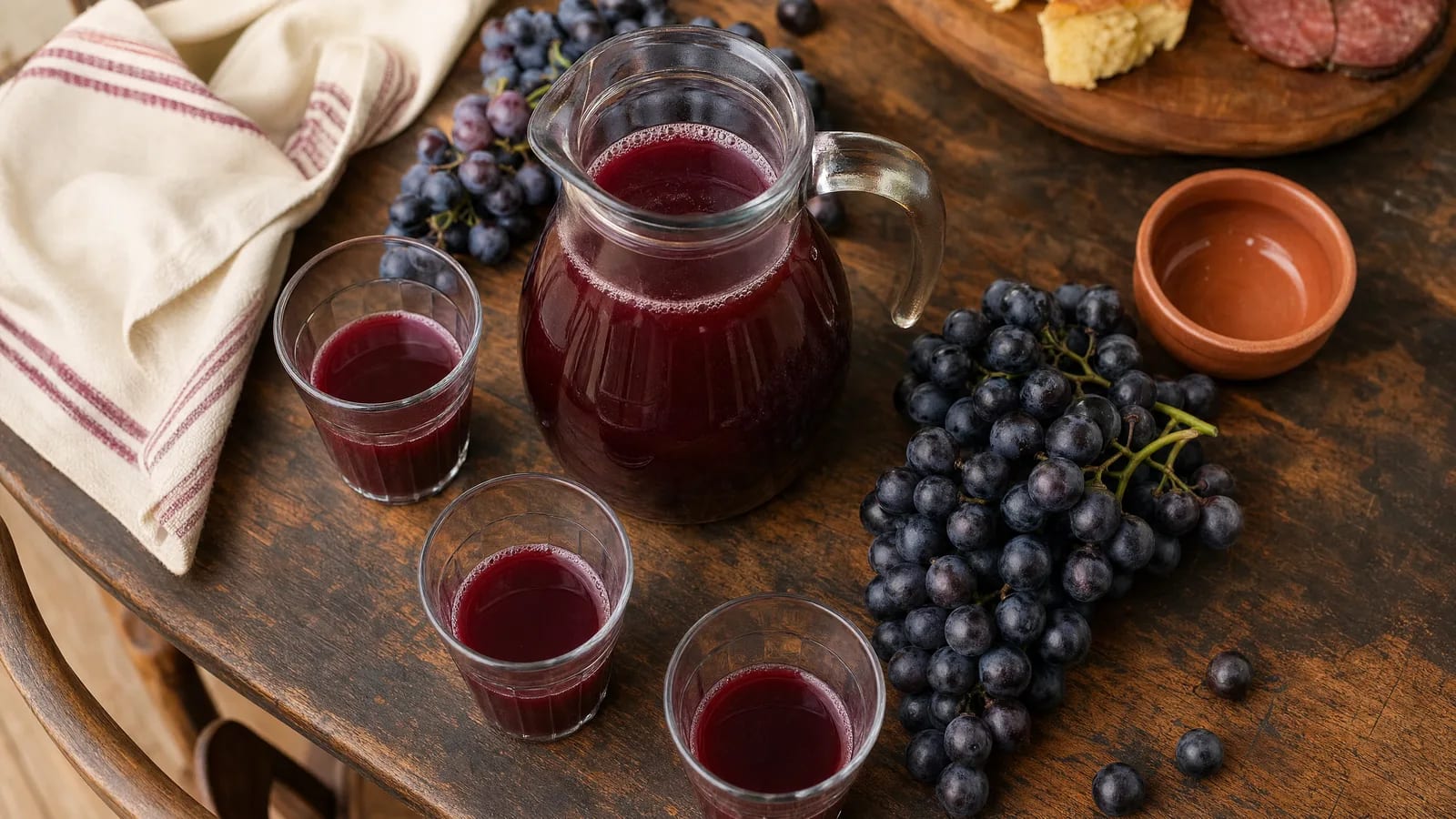
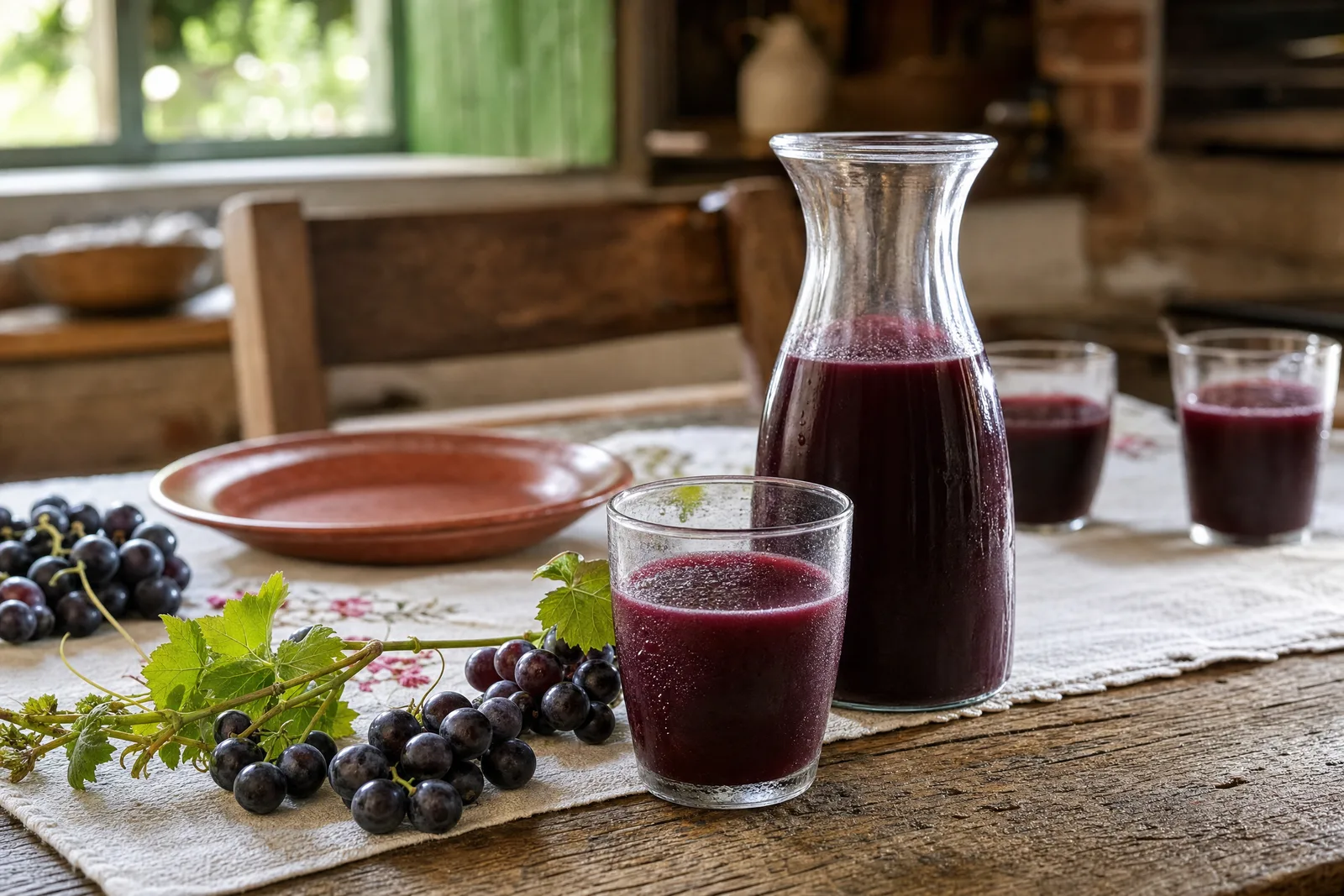
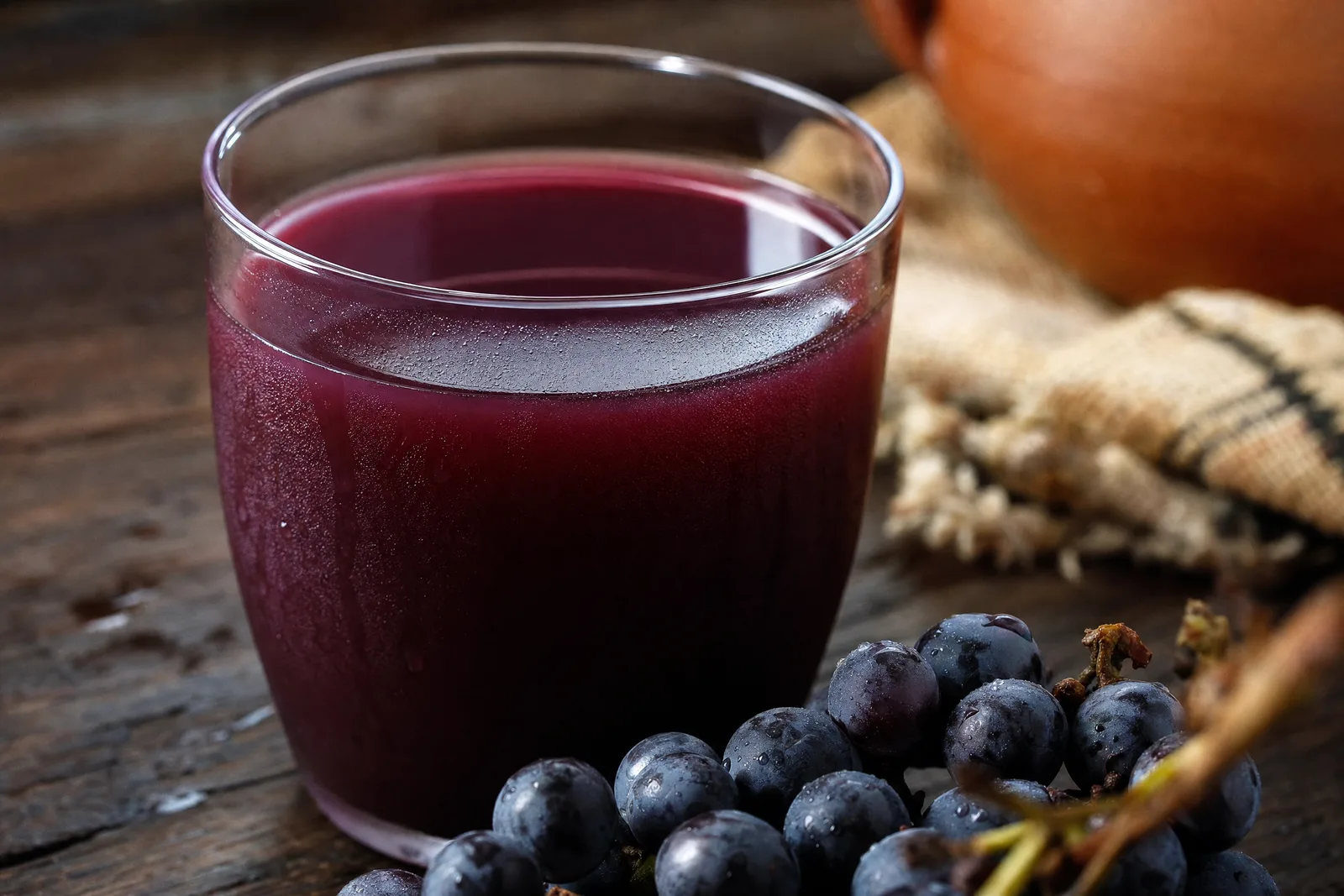
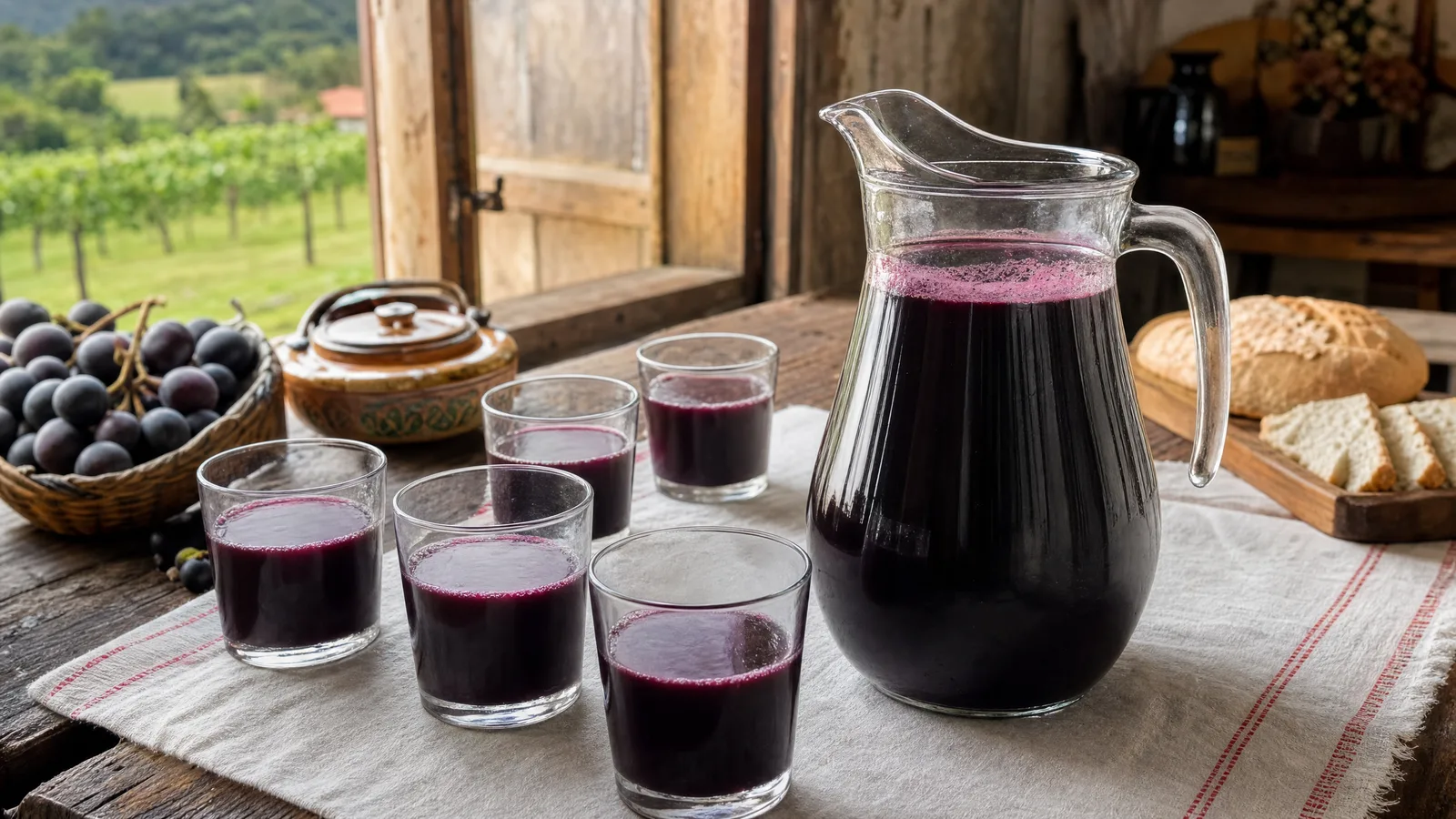
Made with ripe red grapes alone, this pure juice concentrates the color and aroma that run through the wine cellars and traditional coffee tables of the Serra Gaúcha — southern Brazil’s wine country. With neither sugar nor water, it calls for fine fruit and an attentive flame.
Behind the flavor
In the Serra Gaúcha, grapes are more than what fills a glass: they shape the landscape, family labor, and the tables of communities marked by Italian immigration. Pure grape juice gives that bond an everyday form — fruit harvested and transformed into a drink without fermentation, rich in color and redolent of the winery. Embrapa Grape and Wine, based in Bento Gonçalves, has even developed a technique for making this juice in small batches, a sign of its importance to regional viticulture.
📜 Ingredients
- •Ripe Bordô grapes, preferably from the Serra Gaúcha2 kg (4.4 lb)🔁 Ripe Isabel or Concord grapes — They preserve the juice’s pure character but change its color, acidity, and aroma.
👨🍳 Method
- 1
Remove the Bordô grapes from their clusters, discard bruised berries or any showing signs of spoilage, and wash them carefully under running water. Drain very well.
Use ripe, fragrant fruit: in a juice made only with grapes, the quality of the harvest has nowhere to hide.
- 2
Transfer the grapes to a tall, heavy-bottomed pot and crush some of them with a potato masher or wooden spoon, just enough to split the skins and release their first juices.
Add neither water nor sugar; pure grape juice depends on the liquid naturally present in the fruit.
- 3
Cook over low to medium heat for 20 to 30 minutes, stirring from time to time, until the grapes shrivel, the skins soften, and the juice steams up without coming to a hard boil.
Keep the heat gentle to preserve the grape aroma and prevent the bottom of the pot from caramelizing.
- 4
Turn off the heat and wait 5 minutes. While still hot, strain through a fine-mesh strainer lined with cheesecloth or a clean, boiled cloth, pressing the pulp gently to draw out the juice without carrying over too much pomace.
For a more rustic juice, use the fine-mesh strainer alone and welcome a light haze of pulp in the glass.
- 5
Pour the juice into a clean pitcher, let the steam fade, and refrigerate. Serve very cold; to bottle it and keep it longer, follow a technically validated pasteurization process and use sterilized bottles.
For fresh drinking, the flavor is brightest on the day it is made.
🥃 Pairing
With cachaça
White/silver cachaça, from another state
Herbal, citrusy, and served cold
Take a small, well-chilled sip on its own before the juice: its dryness clears the palate and lets the fruit come forward. Cachaça is not a central tradition in Rio Grande do Sul; here, the drink’s natural bond is with the Serra’s grapes.
Lightly aged/golden cachaça, from another state
Gentle, with very subtle wood
In a separate tasting and a small pour, its light wood note meets the juice’s ripe sweetness without trying to turn it into a cocktail.
Also pairs well with
✈️ A flavor worth the trip
On your next visit to Bento Gonçalves, Garibaldi, or Caxias do Sul, seek out pure grape juice at a wine cellar or family-run agribusiness. Compare varieties and harvests: quietly, the drink reveals the vineyard landscape that made the Serra Gaúcha famous.
💡 Quick tips
- •Avoid underripe grapes: excessive acidity cannot be corrected with sugar without compromising the character of pure grape juice.
- •Do not use aluminum utensils; stainless-steel or glass pots, strainers, and pitchers preserve the fruit’s color and flavor better.
- •Serve at 6–10 °C (43–50 °F) to draw out the grape aroma without numbing the palate.
- •The pomace can lend fragrance to jams, preserves, or cake batter; refrigerate it and use it soon after making the juice.
🤔 Did you know?
In 2016, Embrapa Grape and Wine presented a system for small producers to make pure grape juice without adding water; the process includes destemming, crushing, pressing, cooling, sediment removal, and pasteurization before bottling.
Small discoveries
- Uvas Bordô · ingredient
- A red grape variety prized for its intense pigment and pronounced aroma, widely used for making juice.
- Pasteurização · technique
- Controlled heating of juice before bottling to reduce microorganisms and increase its stability.
- Serra Gaúcha · cultural expression
- A region of Italian settlement in northeastern Rio Grande do Sul, known for its vineyards, wine cellars, wine, sparkling wine, and grape juice.
📚 References
- Embrapa Uva e Vinho. Guerra, C. C. Sistema para elaboração de suco de uva integral em pequenos volumes: suquificador integral. Documentos 96, 2016. https://www.embrapa.br/en/busca-de-publicacoes/-/publicacao/1041084/sistema-para-elaboracao-de-suco-de-uva-integral-em-pequenos-volumes-suquificador-integral
- Embrapa Uva e Vinho. Sistema para elaboração de suco de uva integral em pequenos volumes — solução tecnológica para micro e pequenas propriedades vitícolas. https://www.embrapa.br/web/uva-e-vinho/busca-de-solucoes-tecnologicas/-/produto-servico/3255/sistema-para-elaboracao-de-suco-de-uva-integral-em-pequenos-volumes
Keep discovering