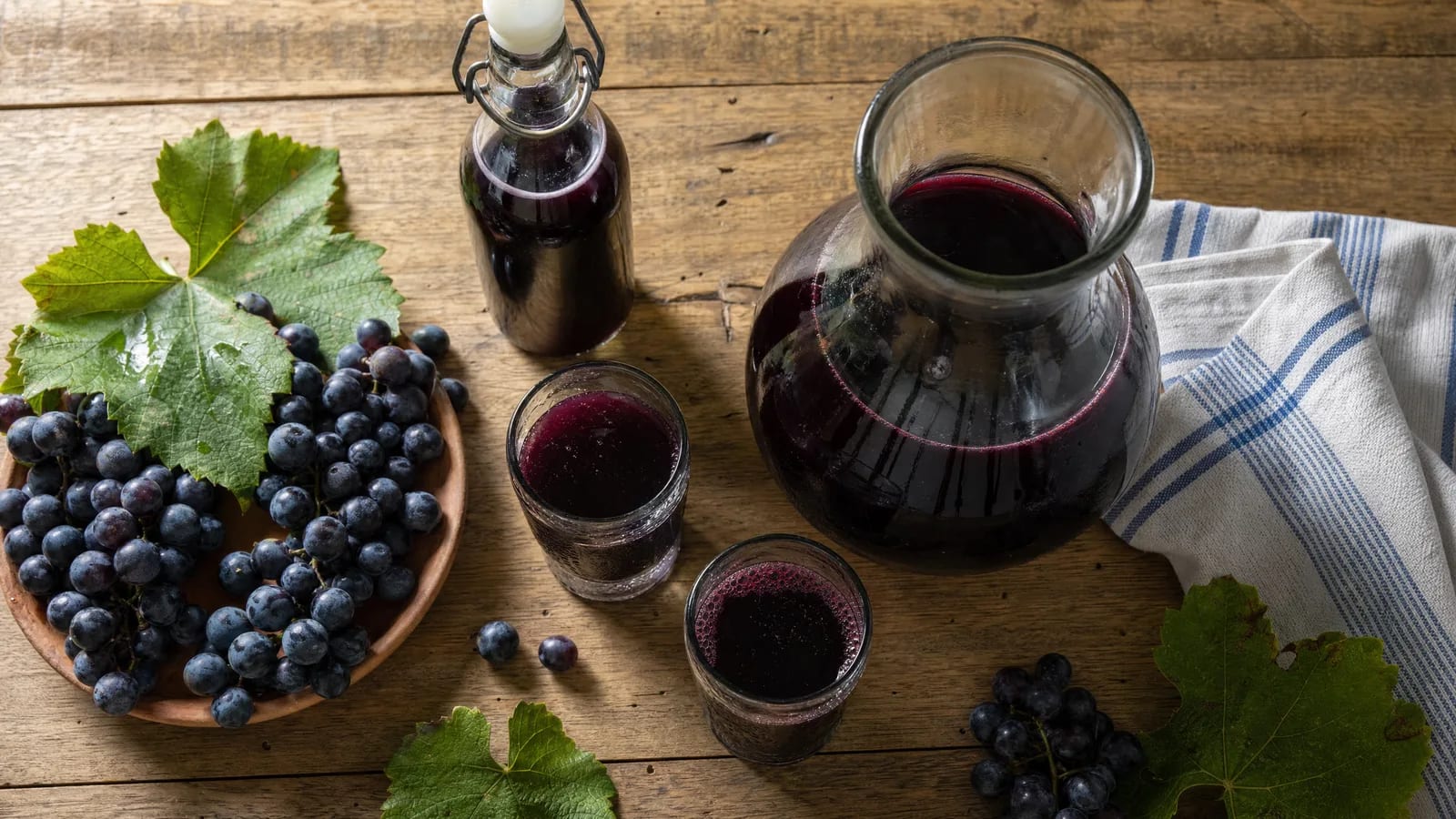
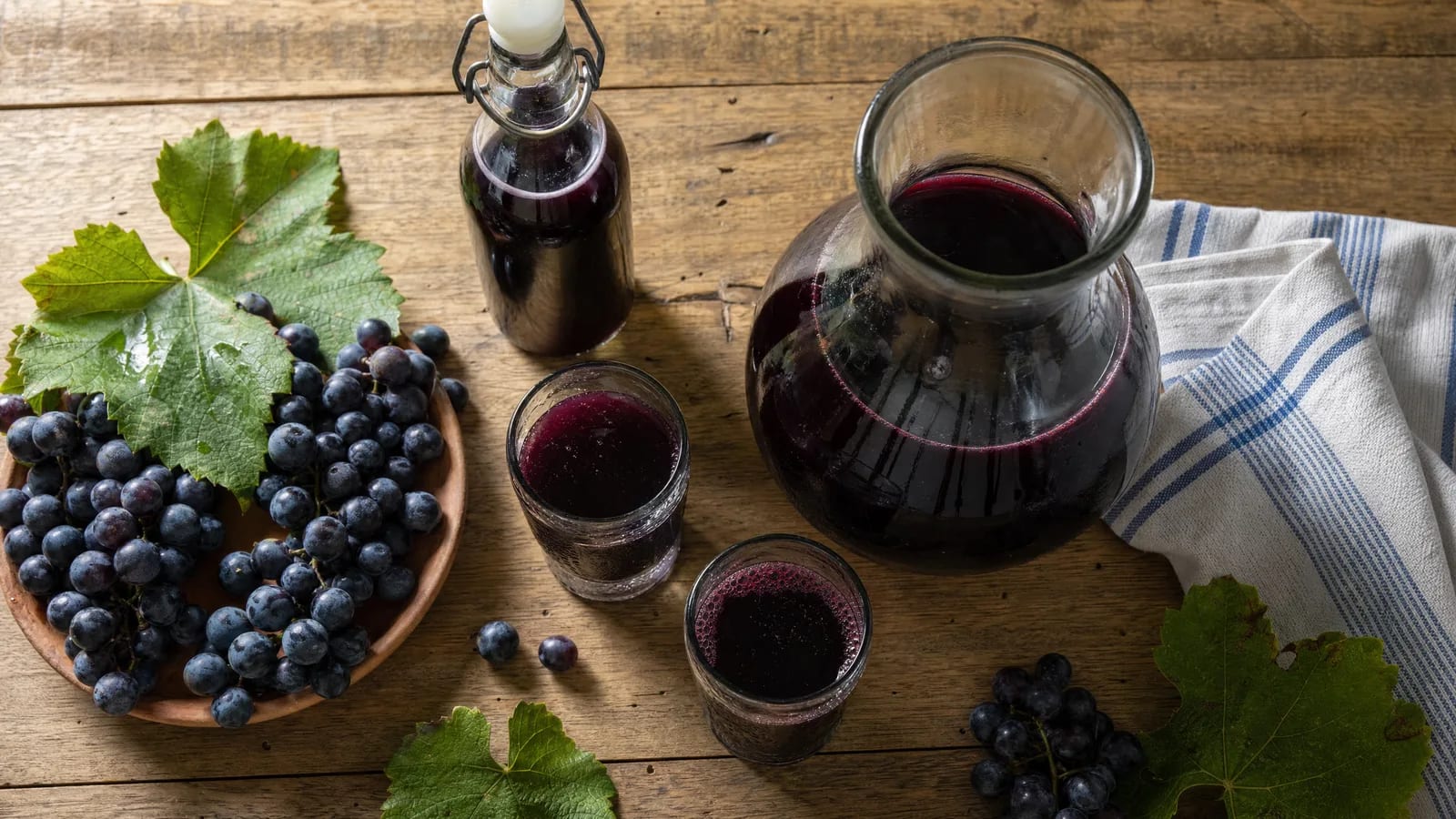
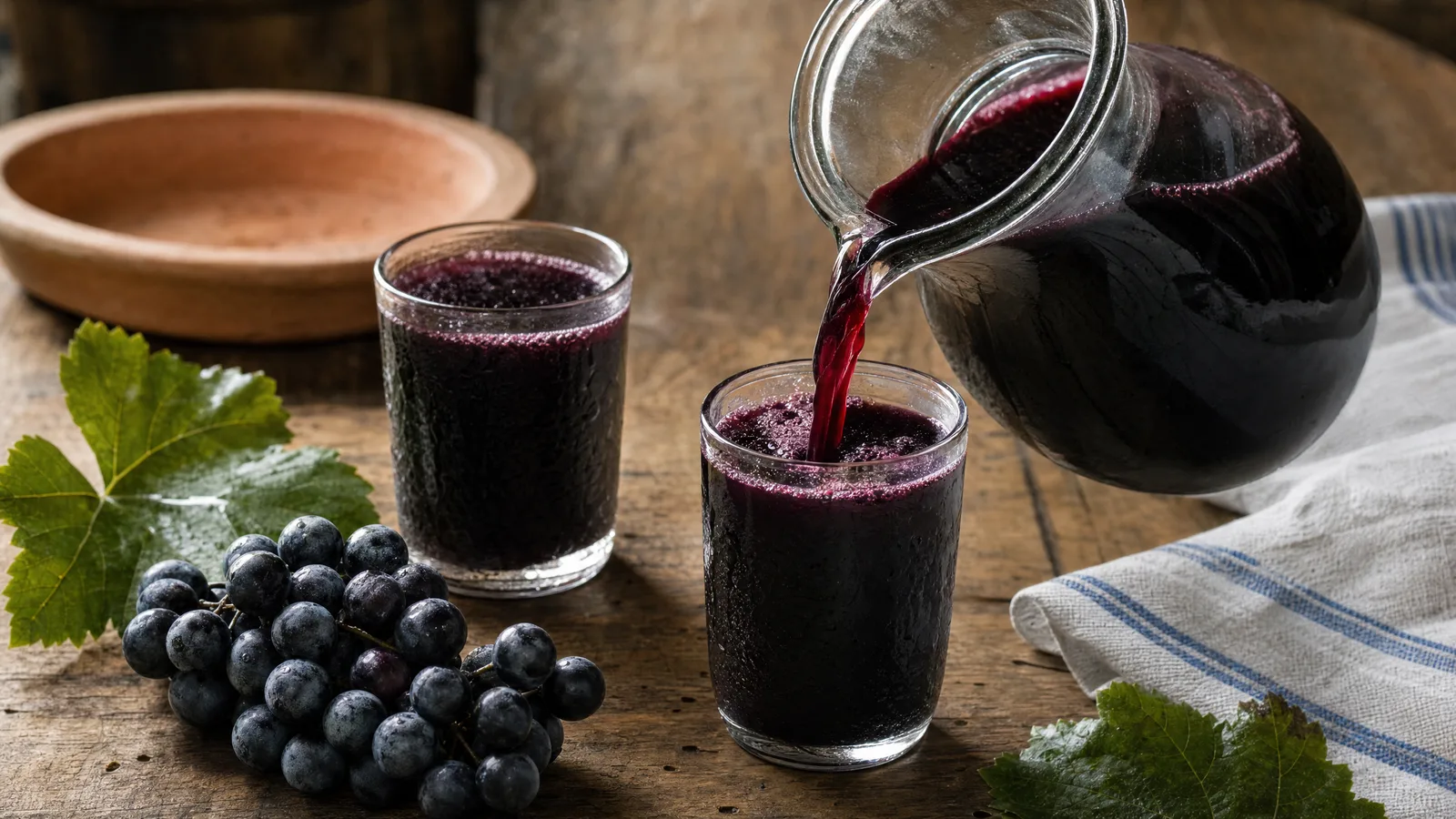
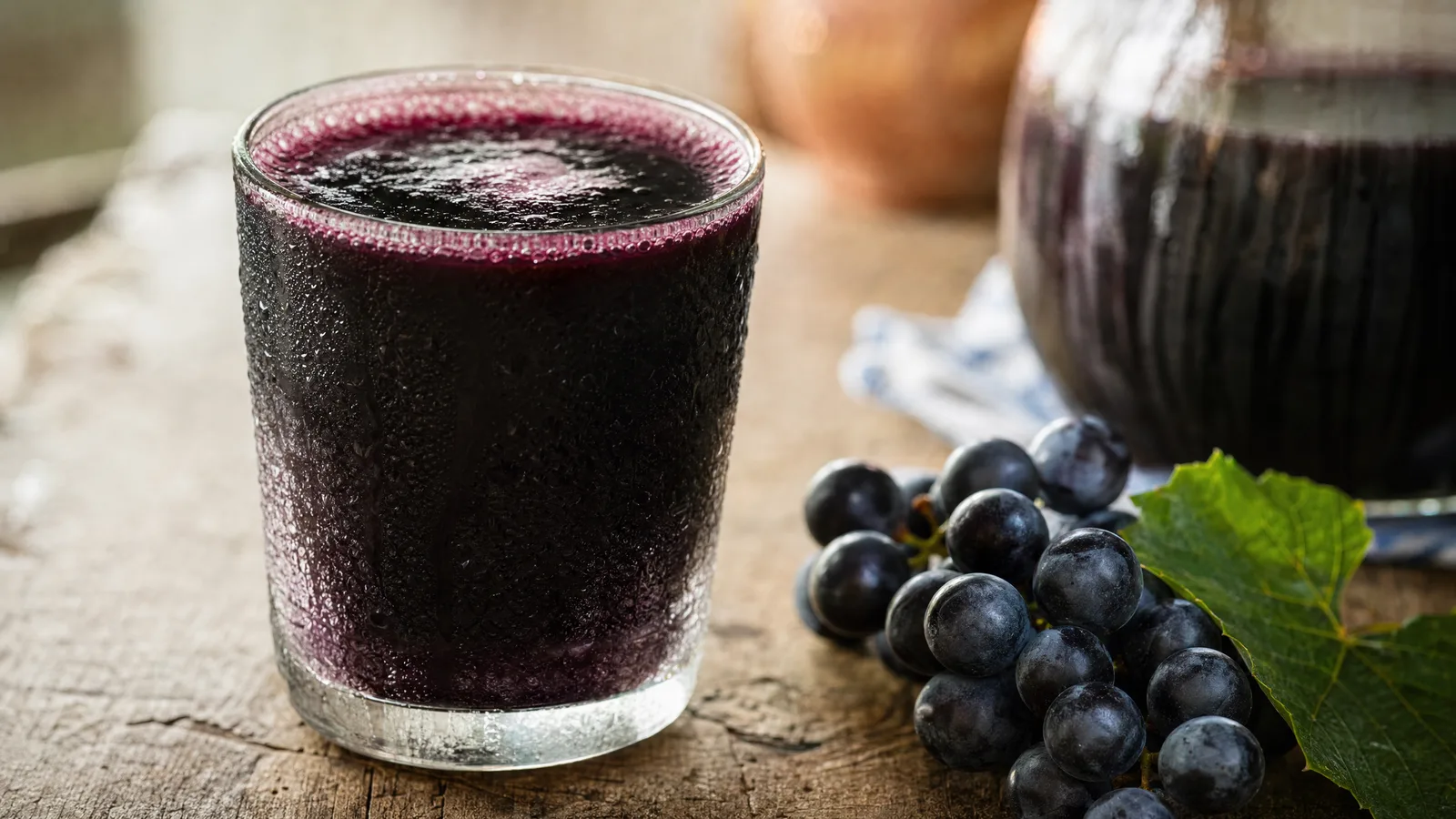
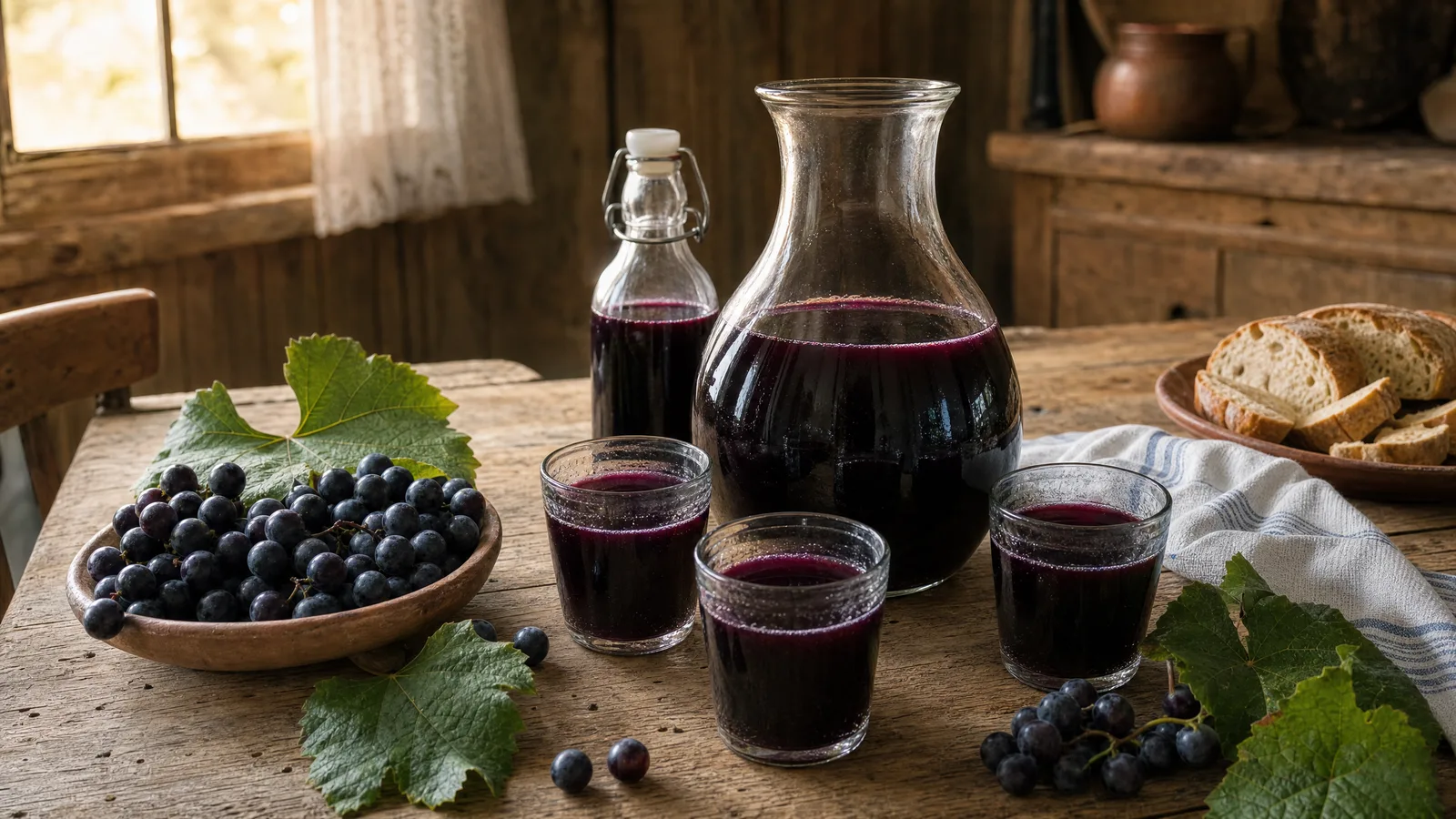
Imagine dark grapes crushed in the pot, releasing fragrant purple juice, strained while still hot and kept in a bottle—the 100% grape juice that Italian families in southern Santa Catarina have made since the days of the first vines. Dense, sweet, and full of color, it is the taste of the colonial table served ice-cold.
Behind the flavor
This juice is Santa Catarina’s Italian heritage in a glass. In the late nineteenth century, immigrants from Italy settled the southern part of the state—Urussanga, Nova Veneza, Criciúma—and planted the first vines, making Urussanga a historic wine region. The same grapes that became colonial wine also yielded 100% grape juice, made without added water for family tables and community celebrations. It is the drink of generous spreads, from the same world as polenta on the wood-burning stove and the cantinas—a piece of Italy that took root in Santa Catarina’s climate and soil.
📜 Ingredients
- •Ripe Bordô or Isabel grapes (juice grapes)2 kg (4.4 lb)🔁 Niagara grapes, or ready-made 100% grape juice (unsweetened) — Niagara grapes make a lighter, less full-bodied juice; ready-made 100% juice is convenient but loses the freshness and intense color of freshly made juice.
- •Water (only to begin cooking)1/2 cup
- •Sugar (optional, depending on the grapes’ sweetness)to taste, starting with a small amount
👨🍳 Method
- 1
Wash the grapes thoroughly and remove them from their stems.
Stems make the juice bitter, so it is worth taking the time to remove every one.
- 2
Place the grapes and the half cup of water in the pot and set over medium heat; crush with a spoon as they warm, cooking for 20–30 min until they have released all their juice and color.
The sign is pulp that has broken down and a dense purple liquid—there is no need for a hard boil; medium heat is enough.
- 3
Taste and, only if the grapes are tart, add a little sugar, stirring until dissolved.
Ripe grapes need almost no sugar—start with a little; true 100% grape juice is pure.
- 4
Strain while still hot through a fine-mesh strainer or cotton cloth, squeezing to extract as much as possible.
Straining while hot yields more juice; take care not to burn yourself while squeezing the cloth.
- 5
Let cool and store in a glass bottle in the refrigerator; serve well chilled.
For longer storage, bottle while still hot in a sterilized glass bottle and cap immediately.
🥃 Pairing
With cachaça
White cachaça from an alambique, light and citrusy
Crystal-clear, fresh, and vegetal.
Shaken with 100% grape juice, it becomes a refreshing grape batida: white cachaça adds backbone without covering the fruit. Serve well chilled.
Rested (light gold)
Smooth and fruity, with a light touch of wood.
For a fuller-bodied, sweeter grape batida, without the wood overpowering the fruit.
Also pairs well with
✈️ A flavor worth the trip
The real thing has a purple hue and aroma that boxed juice cannot begin to match—born of Bordô and Isabel grapes from the settlements. Outside Brazil, Concord or Isabella grapes offer a distant embrace. But if you ever pass through Urussanga or the Italian settlements of southern Santa Catarina at harvest time, try the juice made in the cantina alongside polenta. It is worth the journey.
💡 Quick tips
- •Very ripe grapes = sweeter, more deeply colored juice, with less (or no) added sugar.
- •Serve pure and chilled, or with an ice cube on hot days.
- •Traditionally, many families extract the juice with steam in a juice extractor—the classic settlement method, which yields a clearer 100% juice.
🤔 Did you know?
Brazilian 100% grape juice gets its deep purple color from Bordô and Isabel grapes—American varieties (Vitis labrusca), not the European grapes used for fine wine. Their thick skins and abundant pigment create the dark color and distinctive aroma that European grape juice does not have.
Small discoveries
- Suco de uva integral · technique
- Juice extracted only from grapes, with no added water or—ideally—sugar; that is why it is dense, dark, and more intense than industrialized nectars.
- Uva Bordô / Isabel · ingredient
- American grapes with thick skins and abundant pigment, suited to juice; they lend the deep purple color and distinctive aroma.
- Urussanga · cultural expression
- A town in southern Santa Catarina settled by Italian immigrants, a historic wine region for colonial wine and juice.
📚 References
- EPAGRI — Empresa de Pesquisa Agropecuária e Extensão Rural de SC: viticultura no sul catarinense (Urussanga)
- IPHAN — registros sobre a imigração italiana e a cultura das colônias no Sul
- IBGE — produção de uva em Santa Catarina
- Câmara Cascudo, 'História da Alimentação no Brasil' — bebidas e a herança da imigração italiana
Keep discovering