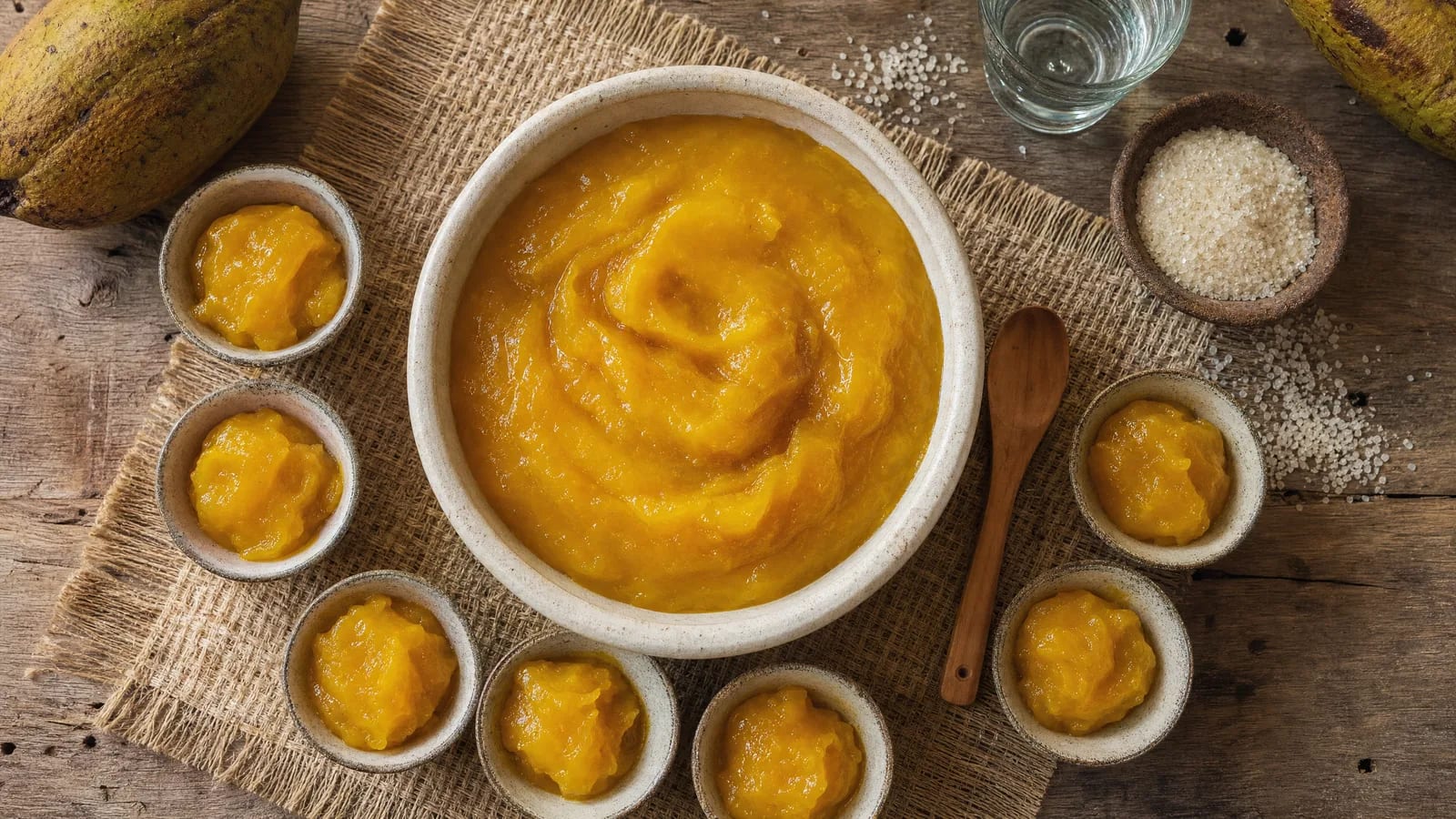
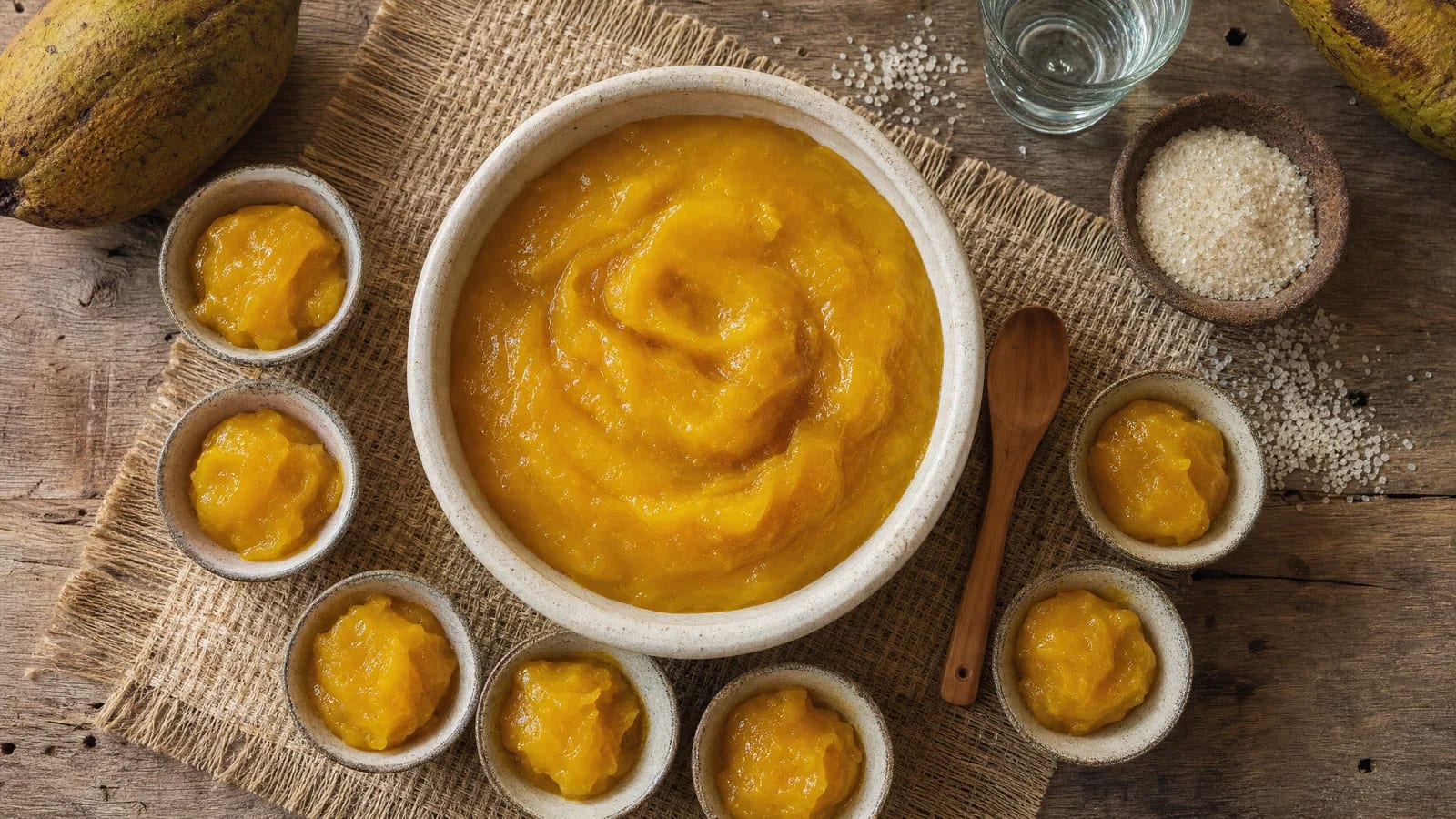
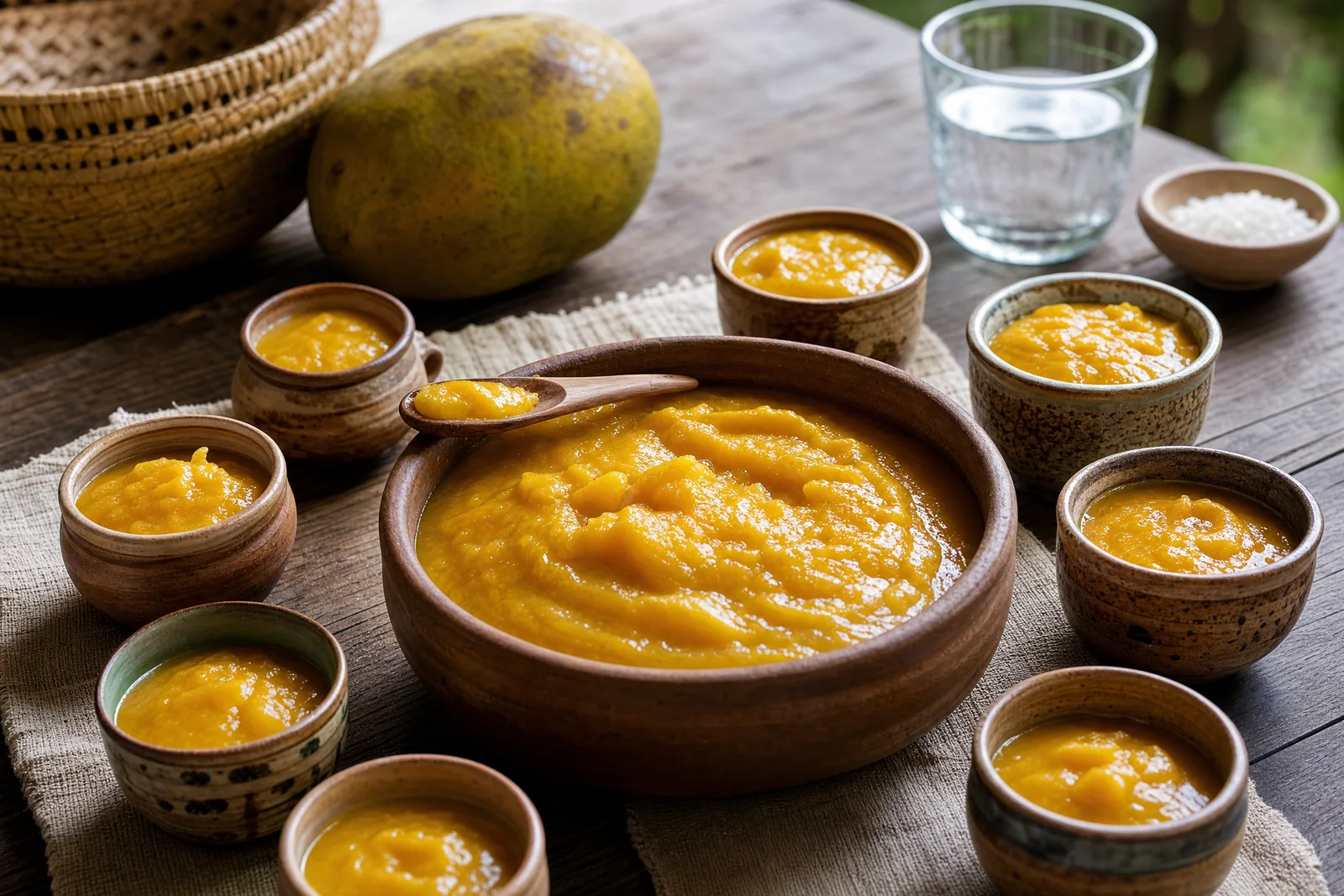
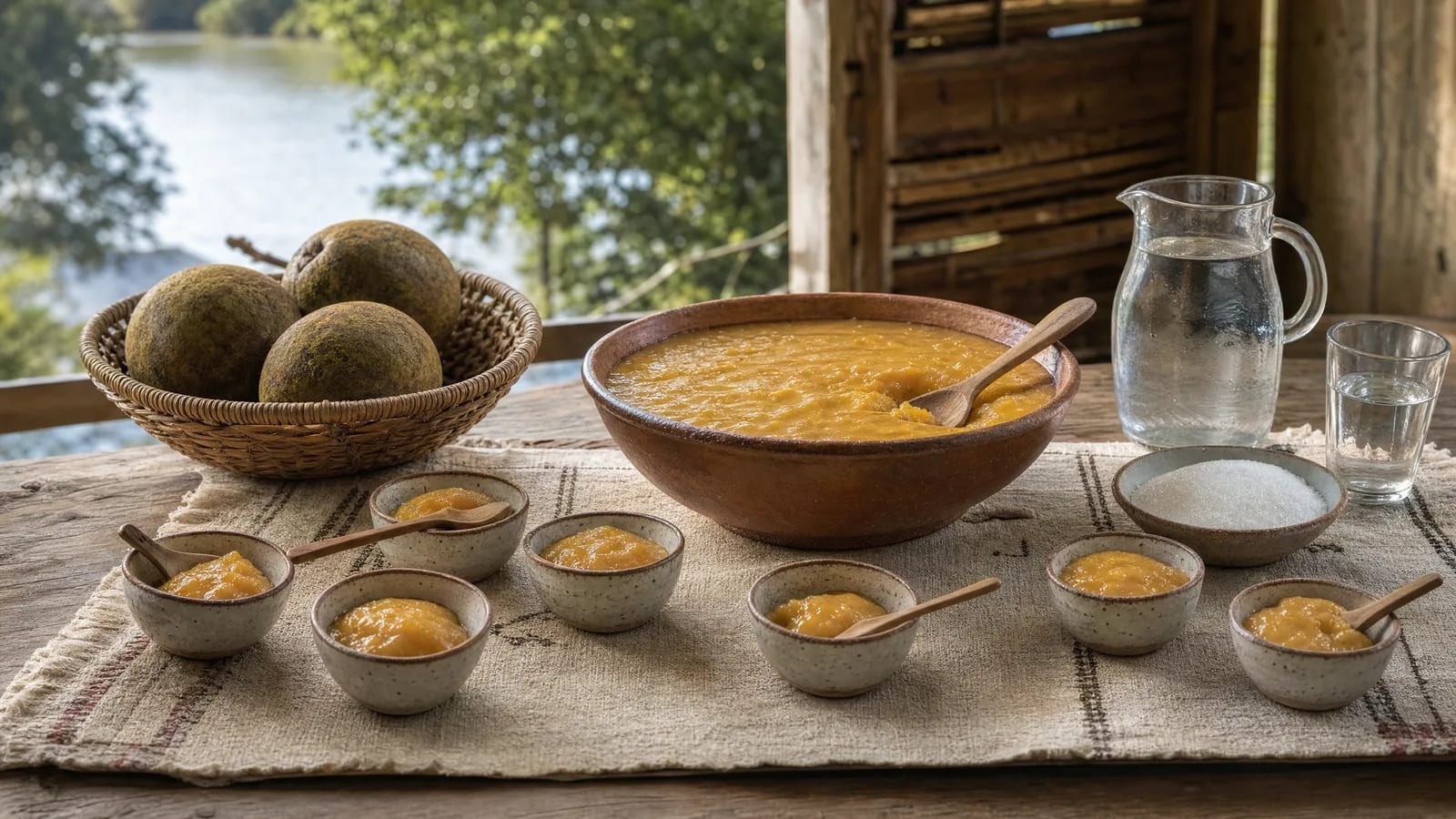
Made with bacuri — a fragrant Amazonian fruit — pulp and sugar, this spoonable preserve celebrates one of the Amazonian fruits found in Amapá. The recipe preserves the pulp’s characteristic aroma, letting the pan do no more than concentrate its color and density.
Behind the flavor
Bacuri, cupuaçu, and other Amazonian fruits make up Amapá’s sensory landscape, reaching home kitchens through markets, fruit pulps, and backyard trees. Bacuri preserve turns a boldly aromatic fruit into a brief table preserve. It is an Amazonian preparation found in the state, not one exclusive to Amapá; its identity lies in letting the fruit speak, with only enough sugar to hold it up.
📜 Ingredients
- •bacuri pulp500 g (18 oz)🔁 soursop pulp — The texture will be similar, but the recipe will lose bacuri’s distinctive perfume and color.
- •granulated sugar300 g (11 oz)
- •water2 tablespoons, only if the pulp is very thick
👨🍳 Method
- 1
If using fresh fruit, remove the bacuri pulp with a small knife and discard the seeds. If using frozen pulp, thaw it in the refrigerator until evenly smooth.
The pulp must be unsweetened; sweetened versions prevent proper adjustment of the cooking stage.
- 2
Combine the bacuri pulp and granulated sugar in the heavy-bottomed pan. If the pulp is very firm, add the water. Cook over medium heat for 5 to 7 minutes, stirring until the sugar dissolves and the mixture comes to an even boil.
The water only helps start the cooking; it should not make the preserve runny.
- 3
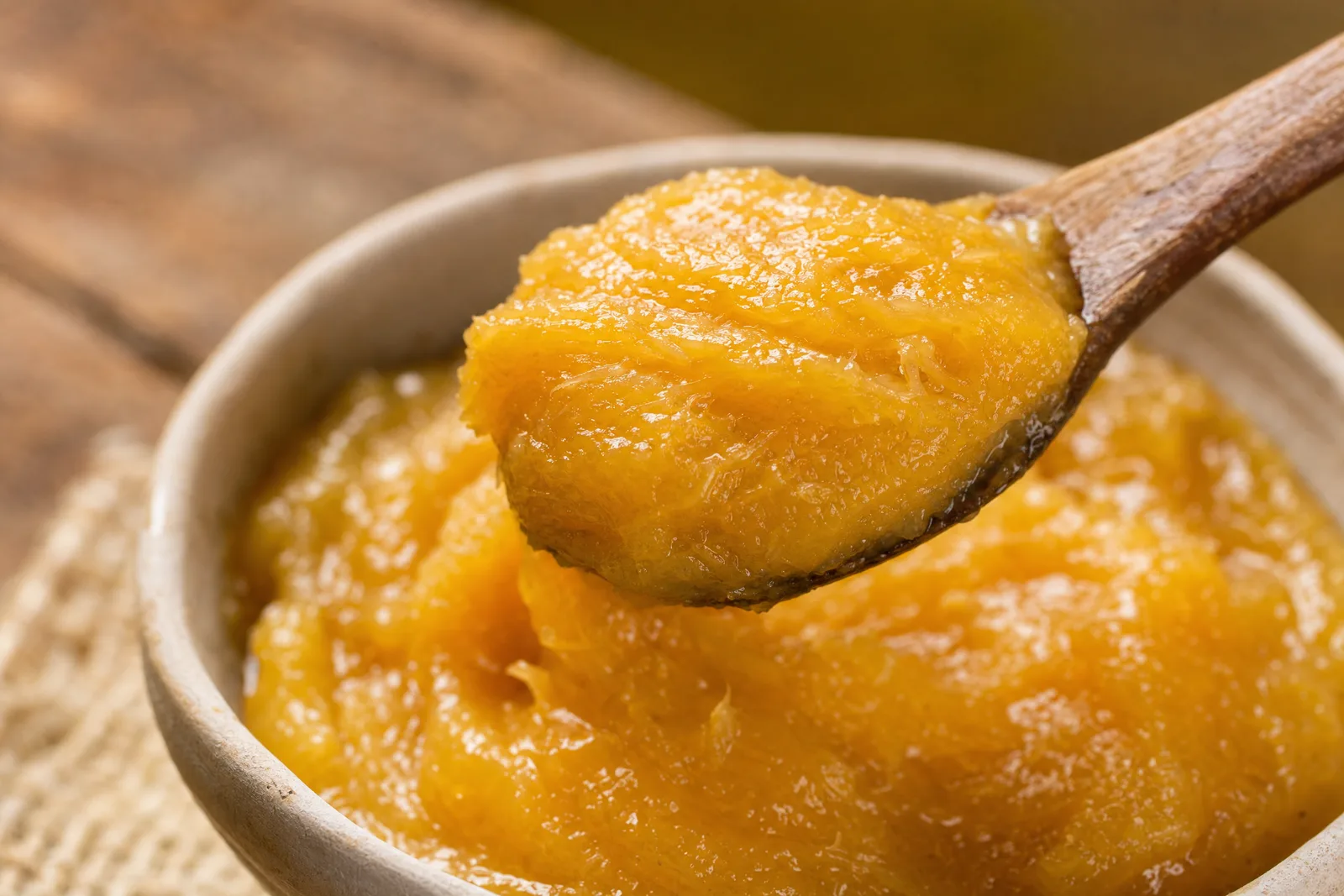
Reduce to medium-low heat and cook for 18 to 25 minutes, stirring and scraping the bottom. The preserve has reached spoon stage when the spatula leaves a trail that closes slowly and the bacuri preserve falls from the spoon in thick clumps.
Bacuri sets as it cools; turn off the heat while it is still creamy, not dry.
- 4
Transfer the bacuri preserve to clean jars and let it rest for about 20 minutes before serving. It makes a fine spoonful to end a meal with flavors from the mouth of the Amazon.
Keep covered in the refrigerator and consume within 7 days.
🥃 Pairing
With cachaça
Bold aged
Cachaça from another state, aged in amburana or balsam wood, with notes of sweet spices, vanilla, and pronounced wood.
Its woody profile extends bacuri’s aroma and creates a mature contrast to the fruit’s creamy sweetness.
Lightly golden/rested
Cachaça from another state, lightly rested in wood, with restrained caramel and little astringency.
It pairs more delicately, leaving bacuri at the center and merely rounding out its final acidity.
Also pairs well with
✈️ A flavor worth the trip
If you come across fresh bacuri, open it slowly: the creamy pulp clings to the seeds and perfumes your hands. At Macapá’s markets, ask for unsweetened pulp; beyond the Amazon, pure frozen pulp is the truest way to discover the flavor of this preserve.
💡 Quick tips
- •Taste the pulp before sweetening: bacuri varies in acidity, and 300 g (11 oz) of sugar should be a starting point, not a rigid rule.
- •Do not step away from the pan once the mixture starts to thicken; the bottom can caramelize quickly.
- •For a more elegant presentation, offer the chilled preserve in small glasses, with chopped Brazil nuts on the side.
- •Avoid blending the pulp after it has cooked: the preserve loses its naturally velvety texture.
🤔 Did you know?
Embrapa, the Brazilian Agricultural Research Corporation, devoted a joint technical publication to bacuri, cupuaçu, soursop, and açaí, recognizing these fruits as raw materials for Amazonian agro-industrial products. Bacuri is indexed under the species Platonia insignis.
Small discoveries
- Bacuri · ingredient
- An Amazonian fruit with pale-yellow pulp, an intense aroma, and a naturally creamy texture, from the species Platonia insignis.
- Ponto de colher · technique
- The stage at which the preserve holds its shape on a spoon, remains moist, and becomes firmer as it cools.
- Foz do Amazonas · cultural expression
- The region where the Amazon River meets the Atlantic, a landscape that shapes rivers, markets, and ways of life in Amapá.
📚 References
- Embrapa Amazônia Oriental — NAZARÉ, R. F. R. de. Produtos agroindustriais de bacuri, cupuaçu, graviola e açaí, desenvolvidos pela Embrapa Amazônia Oriental. Documentos 41, 2000. https://www.embrapa.br/en/busca-de-publicacoes/-/publicacao/377932/produtos-agroindustriais-de-bacuri-cupuacu-graviola-e-acai-desenvolvidos-pela-embrapa-amazonia-oriental
- Embrapa — Bacuri: fruta amazônica em ascensão. https://www.alice.cnptia.embrapa.br/alice/handle/doc/872367
Keep discovering