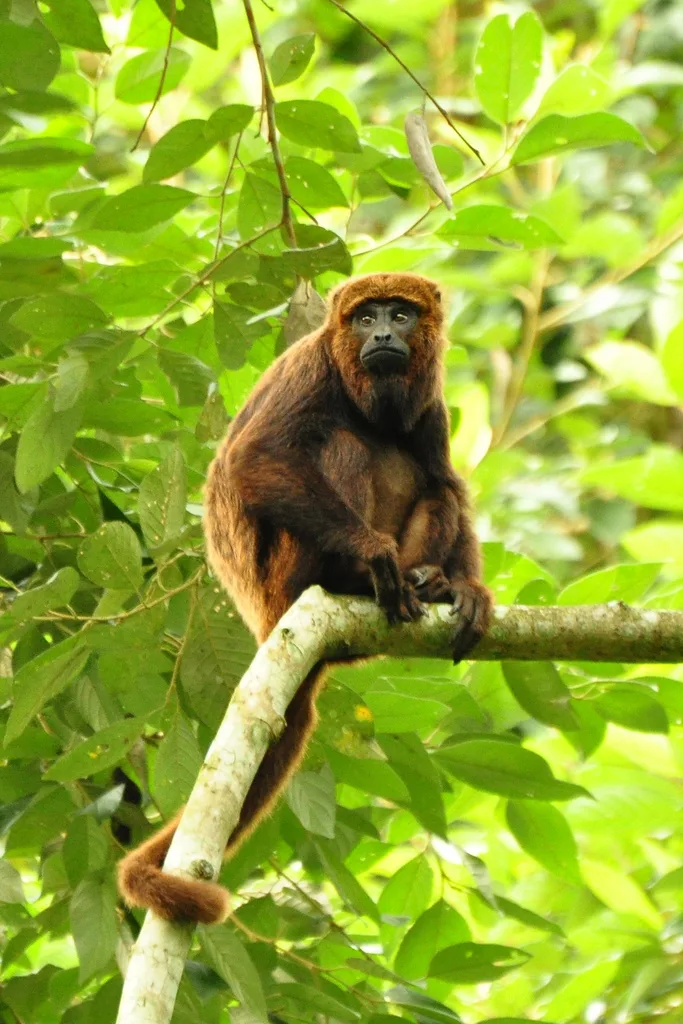
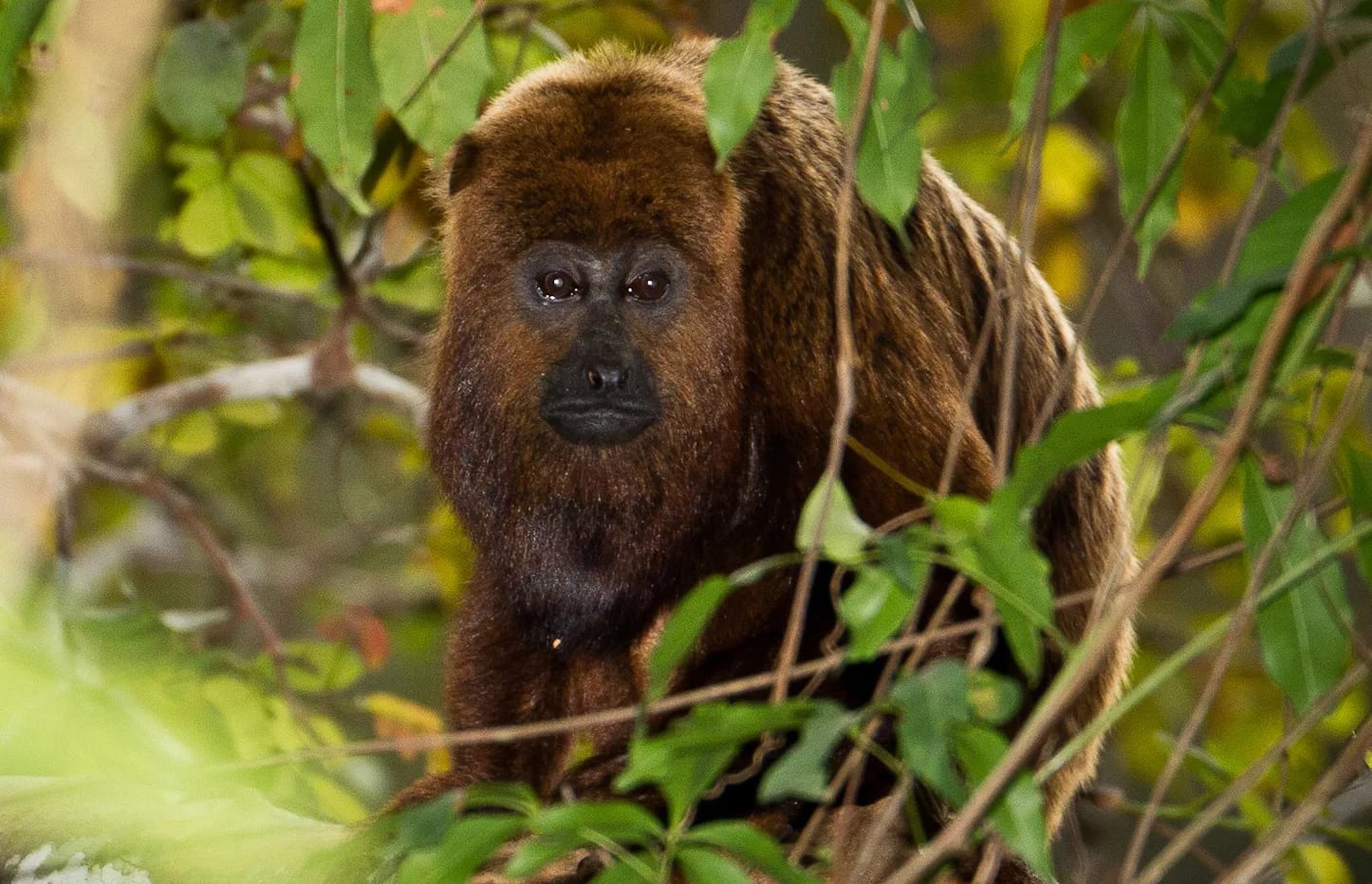
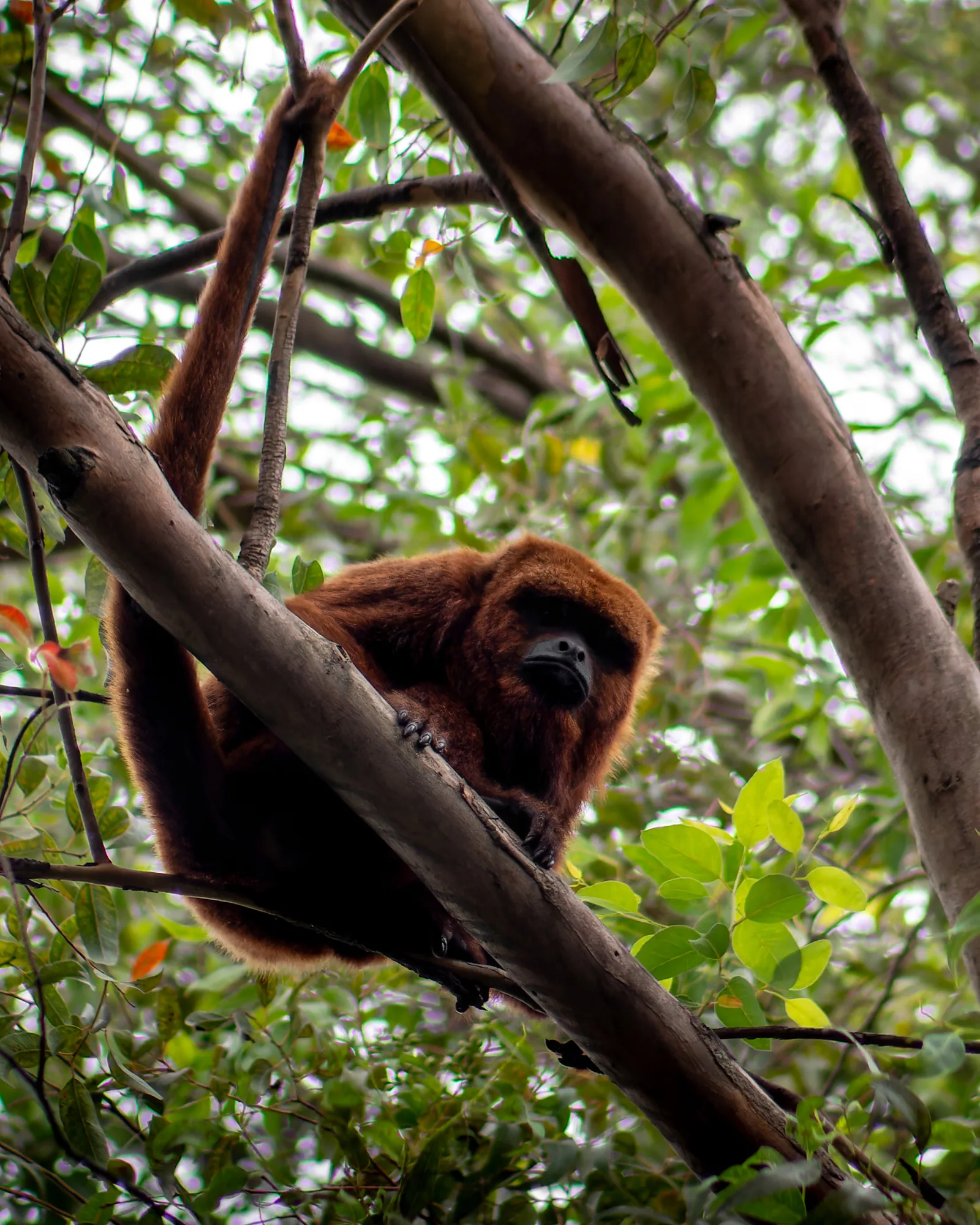
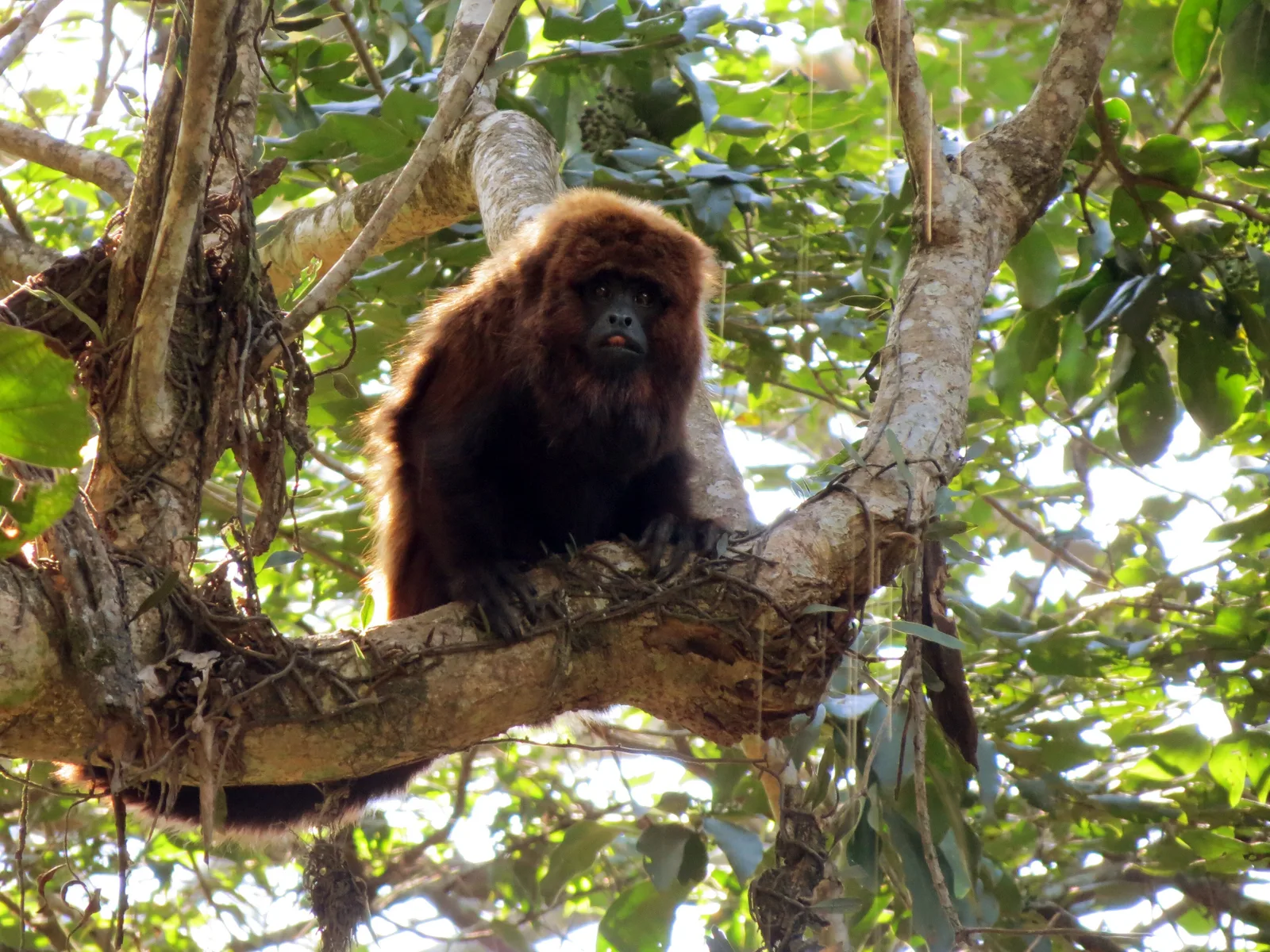
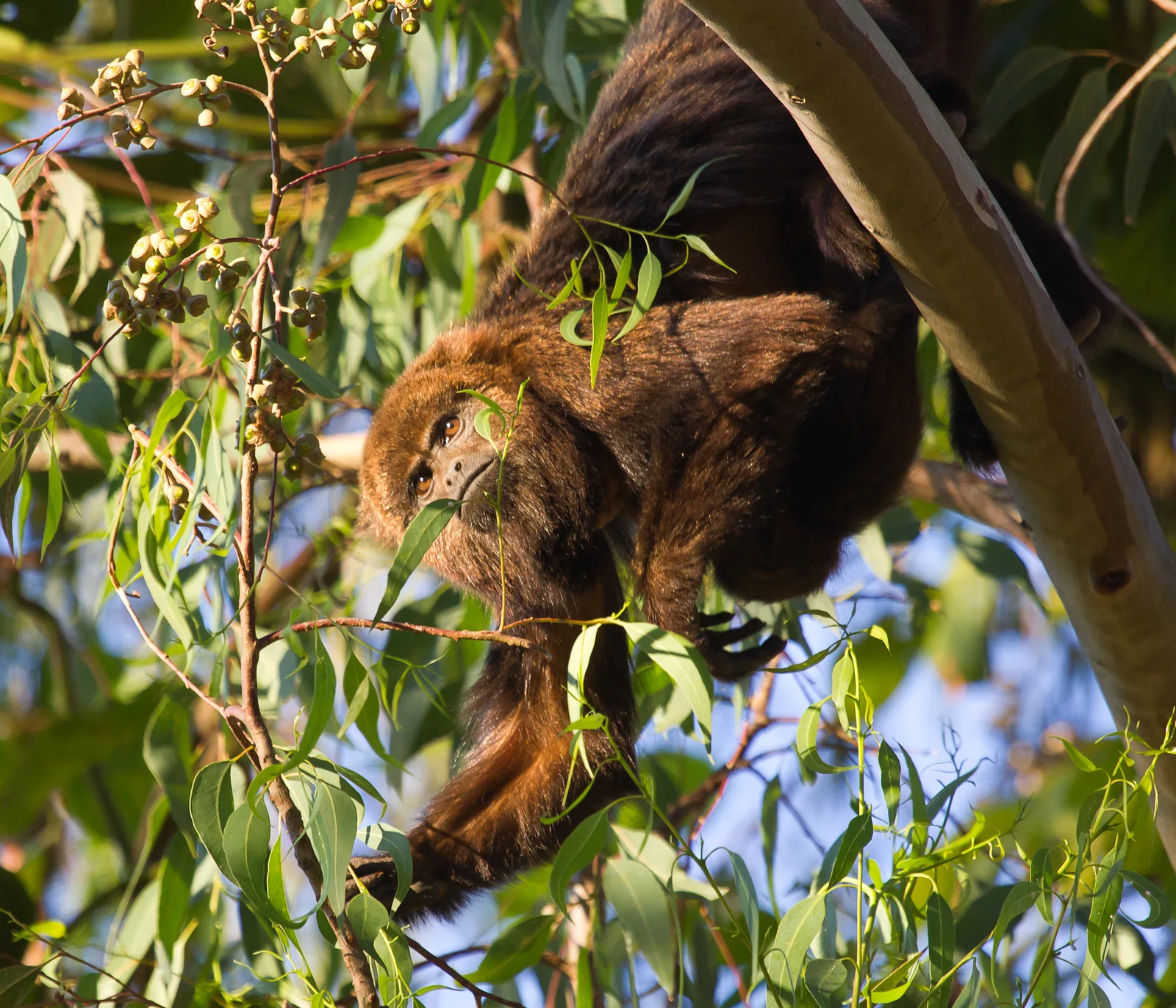
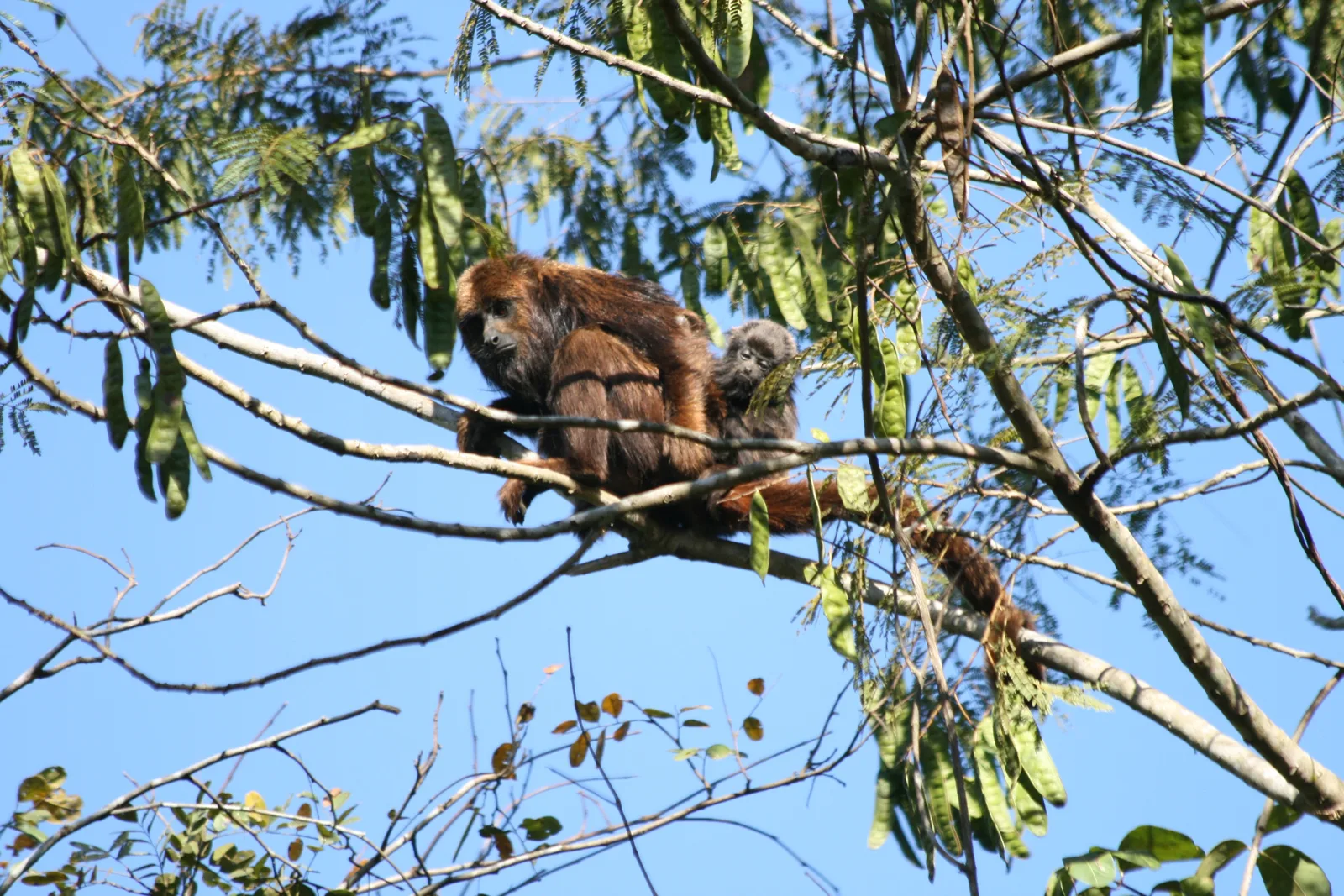
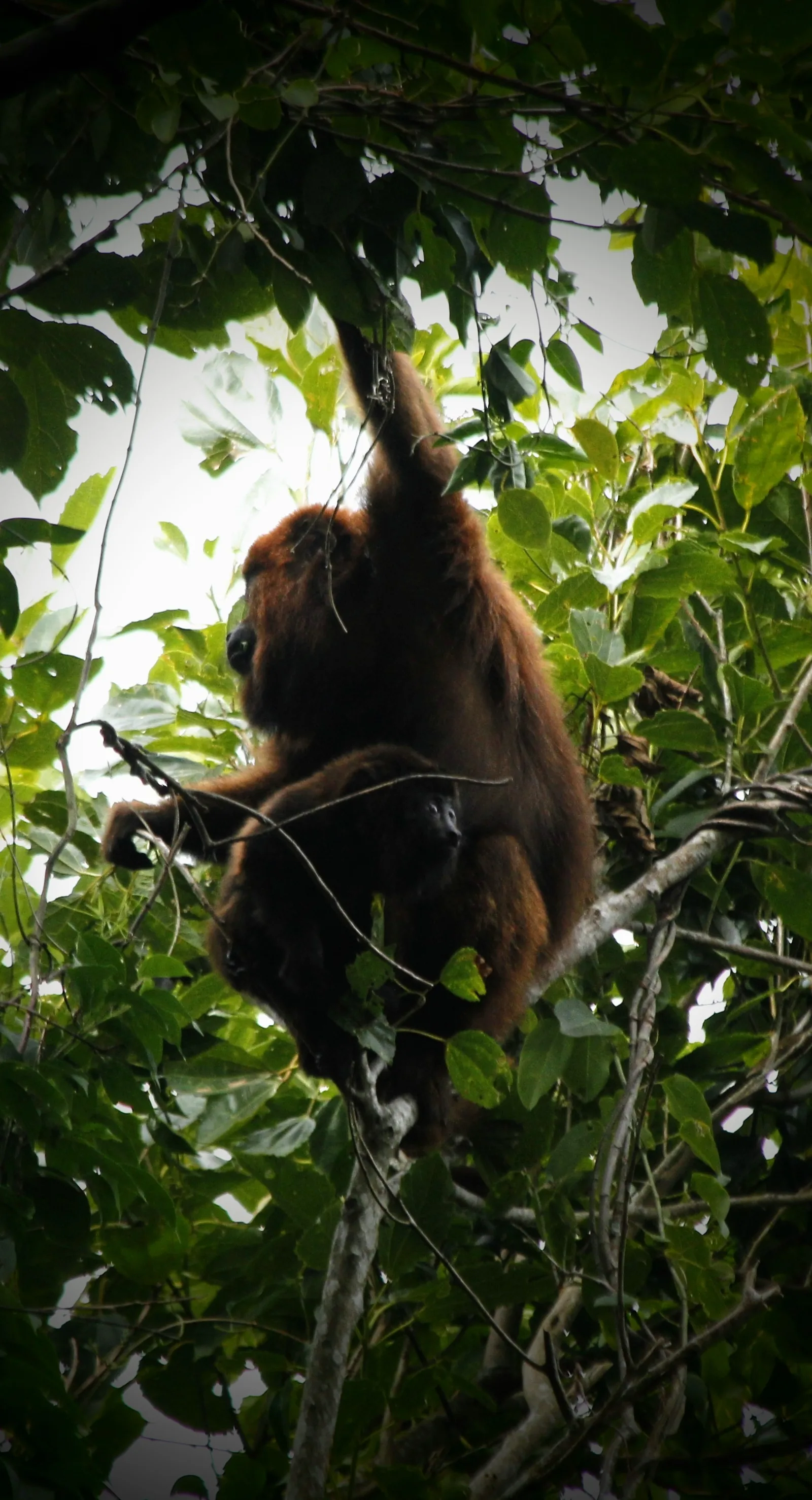
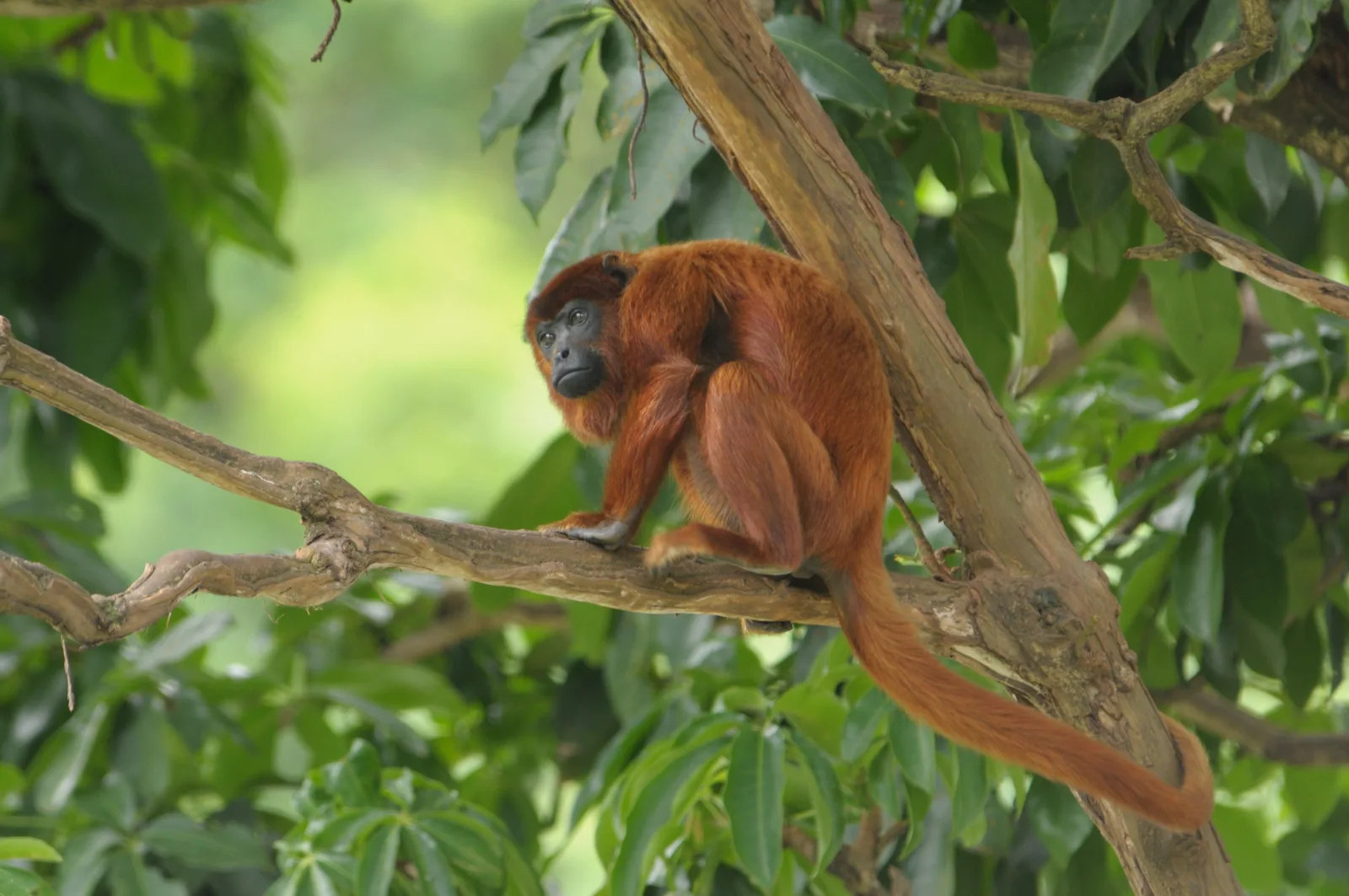
Brown howler monkey
Alouatta guariba
Mammals — Primates (Atelidae • Alouattinae)
The brown howler monkey is one of the Atlantic Forest's most emblematic primates, renowned for a powerful call that carries for miles. Strictly arboreal and primarily folivorous, it disperses seeds and signals forest integrity.
Sound sentinel of the Atlantic forests
Diurnal and socially stable, the brown howler monkey lives in family groups. Its call — among the loudest in the animal kingdom — serves territorial and social-cohesion functions, reducing direct conflict between groups.
📍 Biomes it inhabits
A species endemic to the Atlantic Forest, it is distributed across southeastern and southern Brazil. It occurs in dense humid and seasonal forests, from continuous tracts to well-connected forest fragments.
🌍 Conservation status (IUCN)
VU · VulnerableAccording to the IUCN, the species is classified as VU (Vulnerable). Even so, regional populations are experiencing severe declines due to forest fragmentation and outbreaks of sylvatic yellow fever.
🔬 Scientific classification
- Kingdom
- Animalia
- Phylum
- Chordata
- Class
- Mammalia
- Order
- Primates
- Family
- Atelidae
- Genus
- Alouatta
- Species
- Alouatta guariba (Humboldt, 1812)
⚙️ Specifications and metrics
- Body mass: 4–9 kg (9–20 lb; males larger than females).
- Body length: 50–70 cm (20–28 in), plus a long tail measuring 50–65 cm (20–26 in).
- Tail: prehensile, essential for locomotion and rest.
- Dentition: adapted to consuming fibrous leaves.
- Vocalization: hypertrophied hyoid apparatus, responsible for long-range calls.
- Generation length: ~7–8 years — sensitive to adult mortality.
Diet: Primarily folivorous — young leaves, shoots, fruit, and flowers.
📅 Life cycle
- Gestation: ~180–190 days.
- Litters: usually 1 offspring.
- Parental care: maternal, with social support from the group.
- Lifespan: 15–20 years in the wild.
🔗 Ecological ripple effect
The brown howler monkey disperses seeds and helps regulate the forest's leaf dynamics. Its loss simplifies canopy structure and signals functional collapse in forest fragments.
🤔 Why it matters
- Calls can be heard from more than 3 km (1.9 mi) away.
- They reduce the need for physical confrontations.
- Most intense at dawn and dusk.
- They mark territory and the group's position.
🧪 Did you know?
- It is among the primates most affected by yellow fever outbreaks.
- The term bugio has Indigenous roots and refers to its characteristic sound.
- Two subspecies occur in Brazil, associated with the southeast and the south.
- It is commonly found in well-preserved urban forest fragments.
Small discoveries
- Diurnal
- Activity concentrated during daylight hours.
- IUCN
- International Union for Conservation of Nature — the global authority on assessing extinction risk.
- Prehensile
- A tail fully capable of supporting body weight.